Almost six years ago, I wrote about starting a dinner group for women in tech in Singapore. We’d just moved back from San Francisco, I didn’t know many people, so I invited two women to dinner and asked them each to bring a friend. (My whole method, then and now: pick a date, pour the wine, get out of the way.)
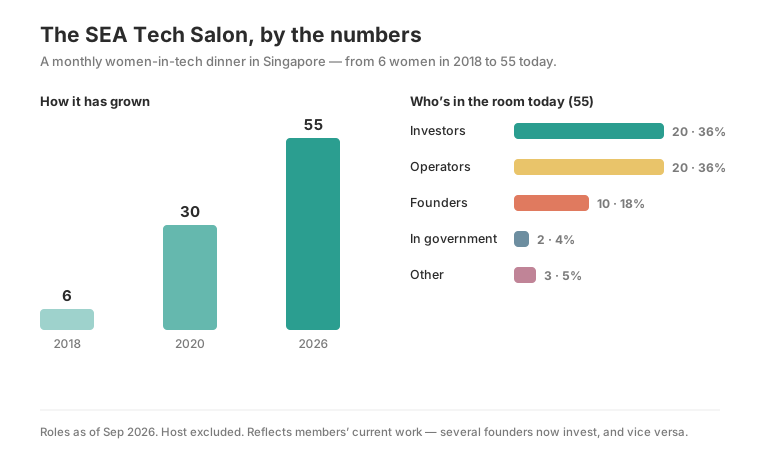
That first dinner was eight years ago. We started with 6. We’re now 55.
I can’t quite believe either number.
What’s stayed the same
We still meet monthly, in each other’s homes. Still women in tech. Still word of mouth — no posts, no photos, no promotion. You get in because someone already in the group brought you.
The three things I wrote about back then still hold: frequency, intensity, and shared values. A group gets close when people see each other often, go a little deeper each time, and want the same things out of the room.
And I believe in all of it more now, not less. The power of community. The value of sitting across a table from someone instead of a screen. The importance of a cadence you can count on. The last few years only made that more obvious.
What’s changed
The room leveled up. The 6 who started are now 55, and the mix has shifted — it’s about a third investors, a third operators, and a core of founders, with a couple in government. What surprises me most is how many are the same people a few chapters later — a bunch have swapped seats over the years, founders who now write checks and investors who went back to building.
Last year I did something I’d put off for years: I pruned the group.
I noticed some folks never came. No judgment — maybe it’s just not the season of your life for this. Kids, a hard stretch at work, whatever it is. That’s fine. But if you’re in the group, I want you to come to a couple of dinners a year and take a turn hosting. (Nobody’s auditing a spreadsheet — but I notice.)
People respond to incentives. Shocking, I know. Once it was clear that being in the group meant showing up, folks who’d never hosted started raising their hands. That’s exactly what I was hoping for.
We got more playful
We’ve also leaned into themed dinners. A book exchange. A Deepavali dinner. An end-of-year holiday one. The theme gives the night a shape and makes it feel festive instead of routine. Small thing, does a lot of work.
Can it travel?
Six years ago I wondered if we could seed the same thing in other cities. One member had just moved to Austin, and I asked whether the trust could travel with her.
It can, but only if someone owns it.
Dubai has a real version going now, started by a woman who was in the Singapore group before she moved. She took the lead — picked the dates, kept the cadence, kept showing up — and it stuck. Elsewhere, people love the idea and talk about starting one, but talking isn’t the same as picking a date and hosting the first dinner. Without a prime mover, it stays a nice idea.
That’s the part you can’t outsource. A group needs someone who’ll drag it into existence and then keep it alive, month after month. It was true for me in 2018, and it’s been true for every version that’s worked since.
The next generation
Here’s the experiment I’m most excited about.
One of our members brought four Gen Z women to a dinner. It turned into a real exchange in both directions — us learning from them, them from us. It got me thinking.
When you’re early in your career, community matters even more. The relationships you form in your twenties compound for decades. I had that in San Francisco without trying. Most young women in tech here have to build it from scratch, the way I did in 2018.
So I put the idea to them: start your own group. I’ll help where it’s useful, but I don’t want to run it. Now we’ll see if they pick it up.
And if they do, I hope it doesn’t look like ours. They’re at a different stage, with different needs. I’d love to see what they keep from our formula — the monthly cadence, the home dinners, the word of mouth, the hosting rotation — and what they toss because it doesn’t fit their lives. That choice is the interesting part. People get more out of a group they built than one they were handed a seat in, so the building has to be theirs.
I’d still want some overlap — the odd dinner where a 28-year-old and a 48-year-old end up at the same table. But their group has to be their thing, run their way, or it won’t mean as much to them.
I don’t know yet if they’ll run with it. But eight years in, ours still works. And I’d love to help more young women in tech build something of their own.
If you’ve built a group that spans generations well — or you’re a younger woman in tech in Singapore thinking about this — I’d love to hear from you.